Growth in enthusiasm, involvement mark 2025-26 edition of Common Cause
Amid the buzzy beginnings of the fall 2025 semester, an August info session for students interested in Common Cause was set to take place. As in years past, attendees planned to meet in Brosseau Commons, one of Nunemaker Center’s comfortable gathering spaces.
By the time the session began, Brosseau was at capacity, with students spilling into the second-floor hallways. “We outgrew the space,” said Dr. Mauricio Gómez Montoya, the program’s student experience designer and Common Cause’s lead coordinator.
Meetings moved to Hashinger Hall’s black-box theater, where more than 60 student design team members got to work on the symposium at the center of the yearlong initiative.
Turning to student mentors
With the larger headcount, program staff saw a need for increased guidance beyond faculty and staff support. “As the initiative has grown, our capacity has not,” noted Gómez Montoya. “We had to identify other sources of expertise.”
They found it among the design team members joining for their second or third years. “We’ve been lucky that we’ve had this corps of frequent flyers who return to Common Cause because it aligns with their values,” said Gómez Montoya. A peer mentor role was established.
“It’s one of the things that has been so remarkable this go-around,” said Thom Allen, the program’s associate director. “Support has expanded to the point where — as I always hope will happen in my classes — they become the teachers, they become the guides.”
Support also came from the honors program’s alumni advisory board, who, impressed by the design team’s dedication, generously provided pizza and sandwiches during their dinner-hour meetings that helped students informally connect and fueled their work.

Common Book connections
For the UN Sustainable Development Goal (SDG) that would serve as the year’s theme and anchor their activity, the design team selected Goal 12, Responsible Consumption & Production — an issue with global implications and a need for interdisciplinary solutions.
Early design team meetings featured presentations from Honors Faculty Fellows Melinda Lewis, Ray Mizumura-Pence, and K. Christopher Beard that aligned their individual disciplines with essays from last year’s KU Reads selection, The Anthropocene Reviewed by John Green.
Dr. Beard, a Distinguished Foundation Professor in the Department of Ecology & Evolutionary Biology, used Green’s essays on Canada geese and Kentucky bluegrass to question the inherent conflict between the pursuit of “the American dream” and the maintenance of biodiversity.
The fellows’ involvement “allowed students to think about responsible consumption and production from such a wide variety of perspectives,” said Gómez Montoya.
As the semester progressed, students formed research groups based on areas of interest, identifying topics that included fast fashion, sustainable infrastructure, greenwashing, local food resources, and artificial intelligence, resulting in a total of eight symposium sessions.
From global to local
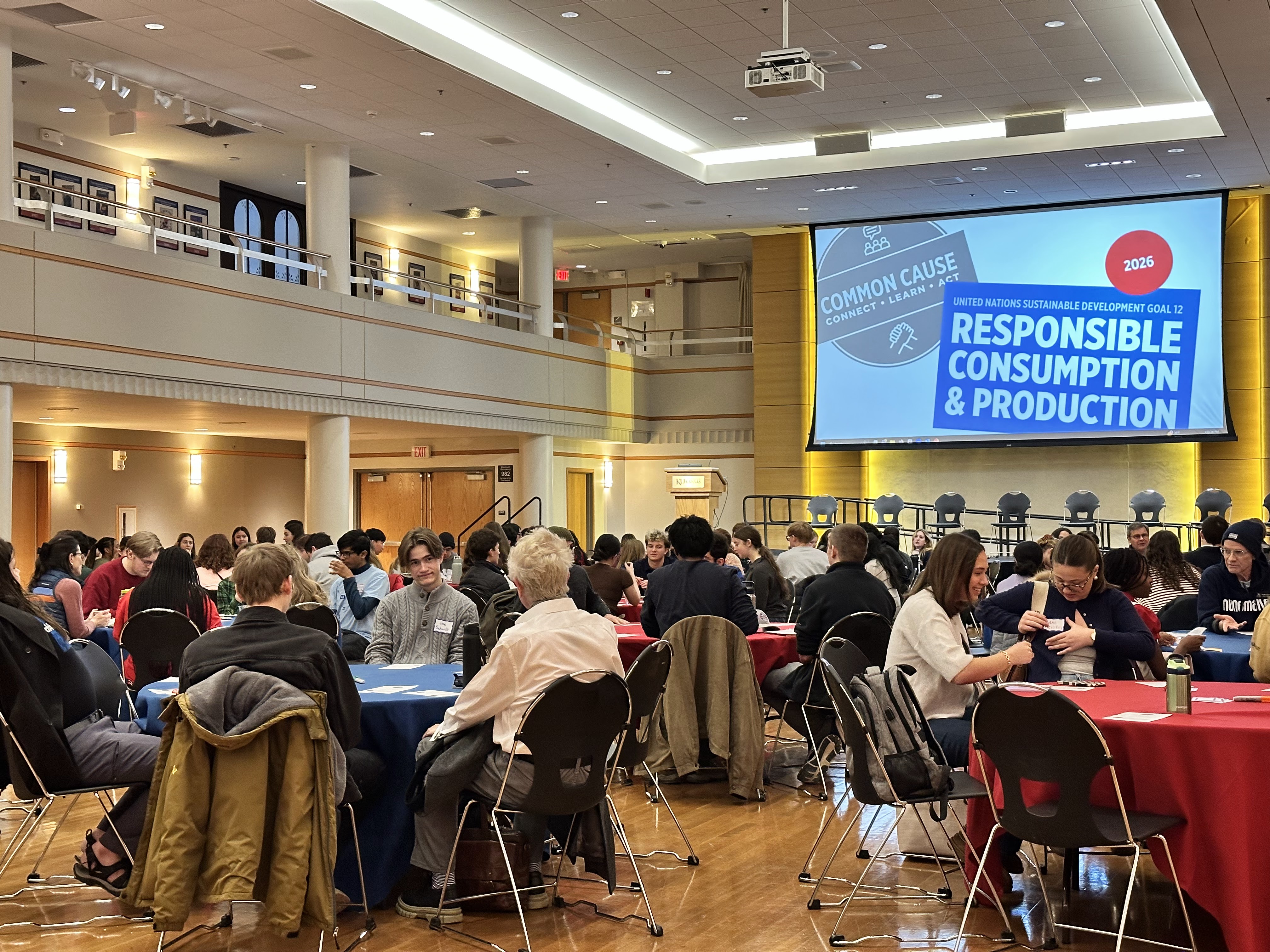
Even on a rescheduled date due to hazardous wintry weather, the February symposium saw the Kansas Union Ballroom fill with a record number of Common Cause participants, drawn into peers’ research through interactive presentations and creative components.
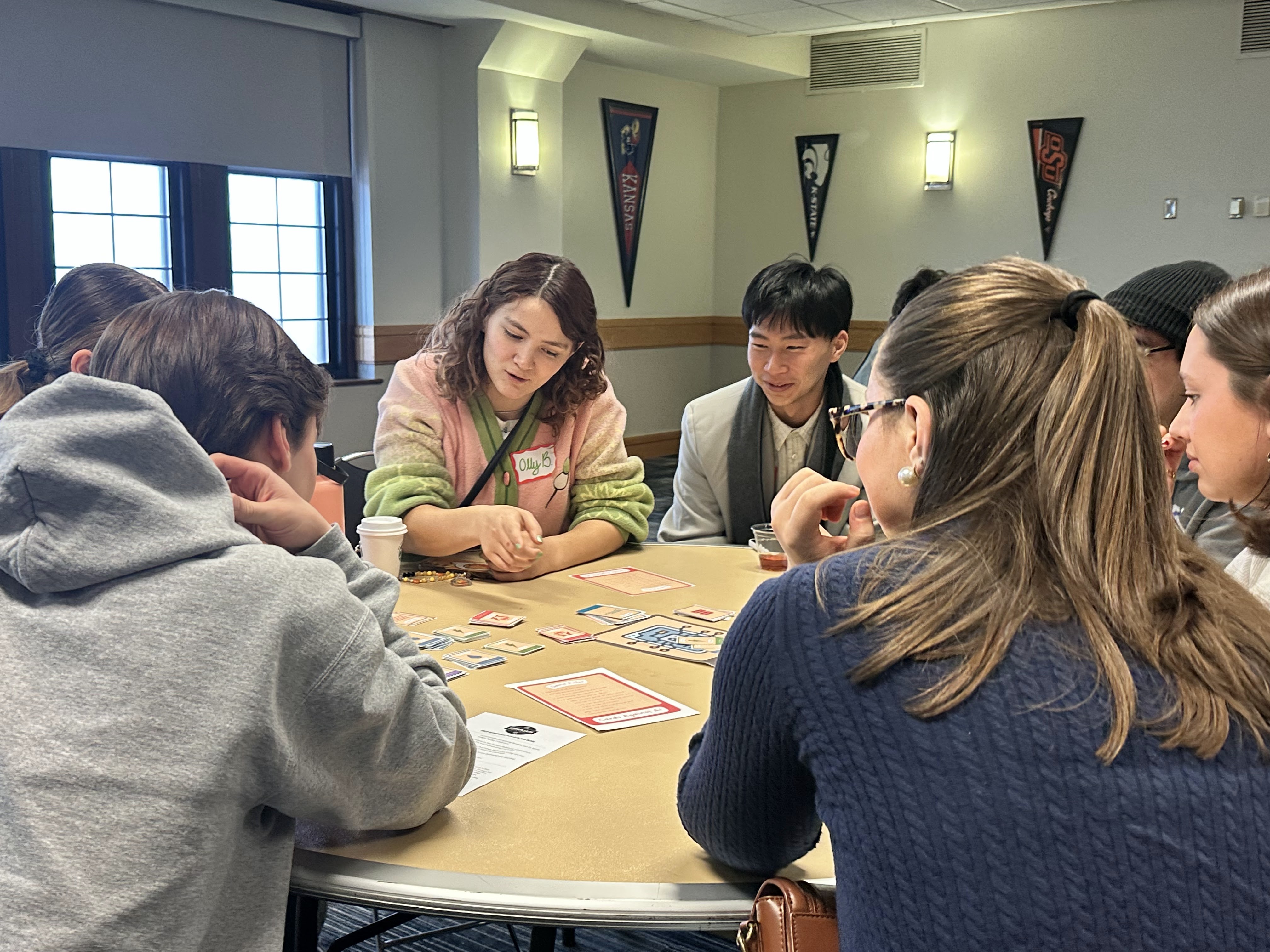
Audrey Glynn, a sophomore French and art history major, mentored a group that created a board game designed to teach session participants about the ecological, physical, and social costs of AI.
“It opened the doorway for a lot of discussion,” Glynn said, observing that the game provided participants with “an opportunity to speak about their own experiences.”
Additionally, a keynote delivered by Dr. Nicole Hodges Persley, a former Honors Faculty Fellow and KU's Vice Provost for Community Impact, asked symposium attendees to reflect on their responsibilities as producers and consumers in both global and local contexts.
“I hope people left understanding what sustainability looks like at an individual level,” said Aarjo Roy, whose group researched greenwashing. “It is our responsibility, as young adults, to establish patterns of sustainable consumption that can be maintained for generations to come.”
Feedback suggests that Roy’s hopes are well-founded. Of the attendees surveyed, 95% reported a better understanding of their place within the systems related to Goal 12, and 96% reported being more likely to participate in community engagement regarding responsible production and consumption.

Valued partnerships
The opportunity to do so came soon after the symposium. Throughout the spring, sustainability-minded Lawrence-area organizations offered students a chance to apply their learning to off-campus activities related to concepts like local food systems and circular economies.
Experiences included mulching at Juniper Hill Farm & Table, furniture assembly at secondhand store Ready for Good, and a look at food-system interdependence facilitated by the Lawrence Farmers Market, with students pitching in to paint the market’s Saint Patrick's Day parade float after.
As a sport management major, M.E. Ramsey appreciated the opportunity to pick up a brush. “There were a lot of talented artists there,” said Ramsey. “It’s not my element, but it was still super fun to paint with other people and talk and connect with them.”
M.E.’s sister Reese appreciated the educational portion of the farmers market activity and found it “refreshing” to learn about ways to get involved locally. “These events give me a sense of hope and belonging in the community — like, I can make a change too,” she said.
That awareness took root at a January Campus & Community Partner Reception, which acted as the initiative’s kick-off spring event. Students “jumped in at the reception,” said Liz Hamel, the program’s student experience coordinator, connecting with Juniper Hill, Ready for Good, the farmers market, and a dozen other local organizations, many of whom appreciated the chance to share their mission and promote the forms of involvement they offer to students.
Hamel recounted an emailed message of thanks from one of the community partners: “It helped restore a little bit of faith in a world that seems gone mad. Sometimes the kids are alright.”
Levels of community
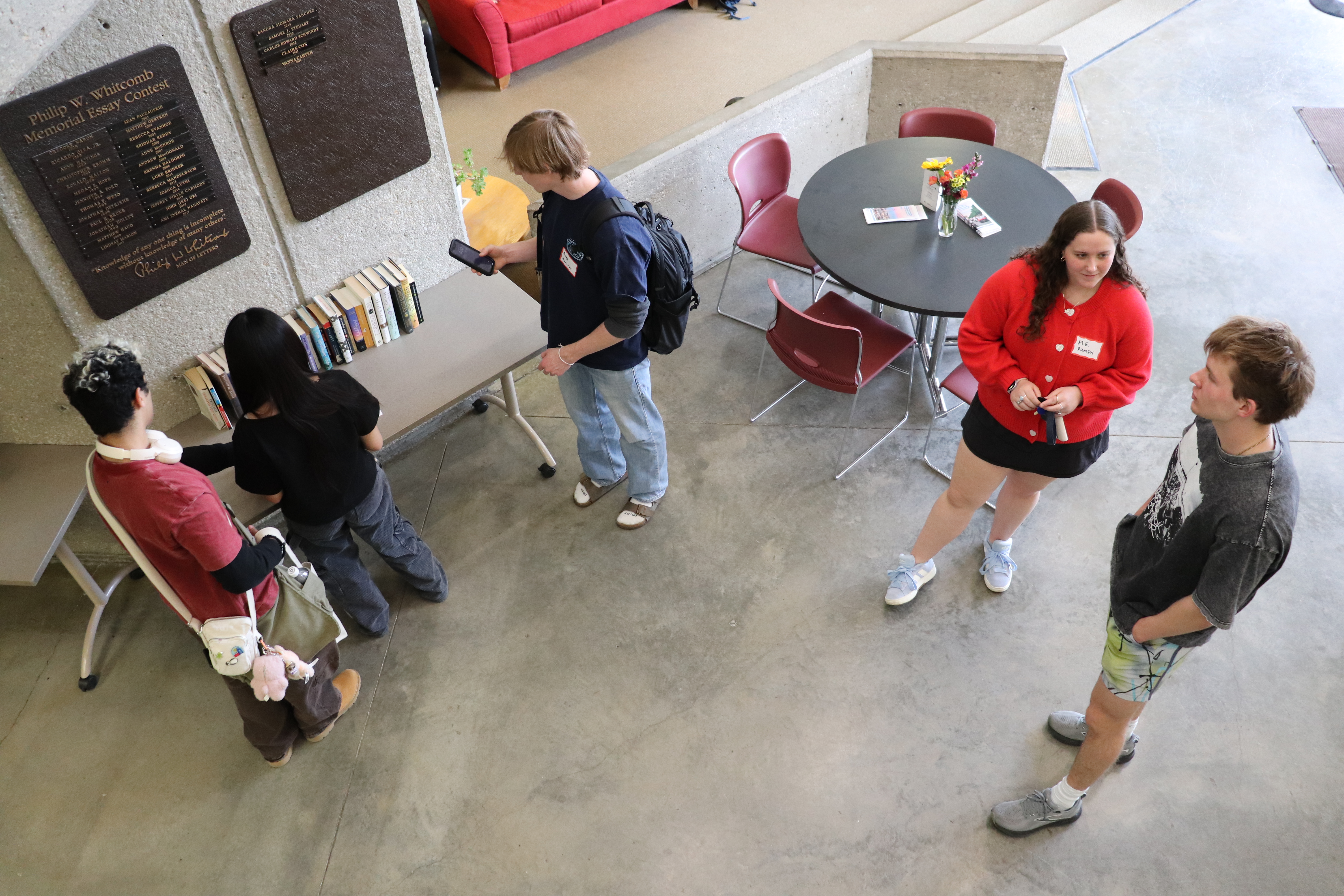
With so much taking place outside Nunemaker Center, student design team members devised an activity that would convert the program’s home into a multilevel sustainability experience — an idea that went from conception to realization in two weeks.
One classroom became a boutique, with donated garments available for free; the other became a screening room for a documentary on fashion waste, with Honors Faculty Fellows in attendance for a discussion.
Upstairs, students assisted Drew Graff, a senior architecture major and textile artist, with the first-ever commissioned Common Cause work of art: four quilts, now on display in Nunemaker, that use disassembled T-shirts from past editions of Common Cause (a giveaway that sunset, given the year’s theme).
“We know that social connections deepen learning,” said Sarah Crawford-Parker, the program’s director, noting that “it was exciting to hear students introducing themselves to one another as they worked shifts at the event or deconstructed T-shirts for the quilt project.”
Sophomore chemical engineering major Grace Oppeau, a self-identified “upcycler,” especially enjoyed the thrifting component. “It really felt like people coming together to share things and help each other,” Oppeau said.